Nvidia stood on stage and called DLSS 5 the biggest leap in graphics since real-time ray tracing turned up in 2018. Which is a very Nvidia thing to say, to be fair. They’d call a slightly brighter loading screen a paradigm shift if they thought it’d move cards. So we folded our arms, put on our best sceptical face, and went digging. And look, the honest answer is annoying: it’s genuinely clever, and we’re still not sold.
Let’s get into it, because there’s a lot of noise and not much plain English floating around.
What DLSS 5 actually is (it’s not upscaling)
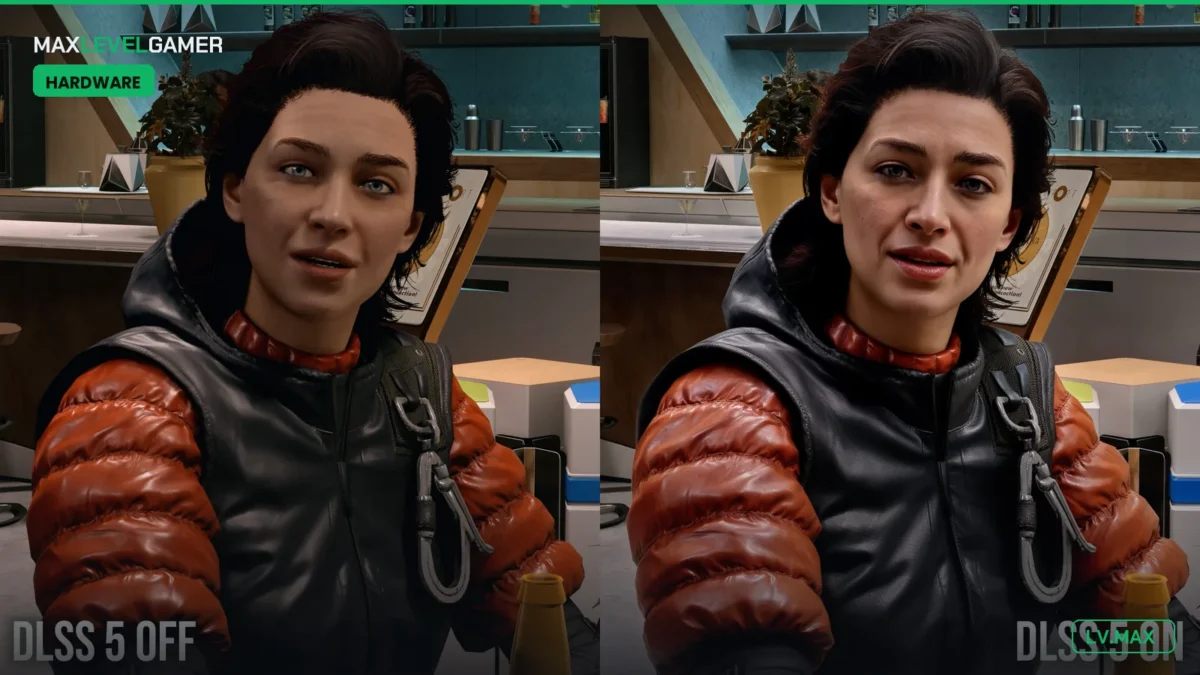
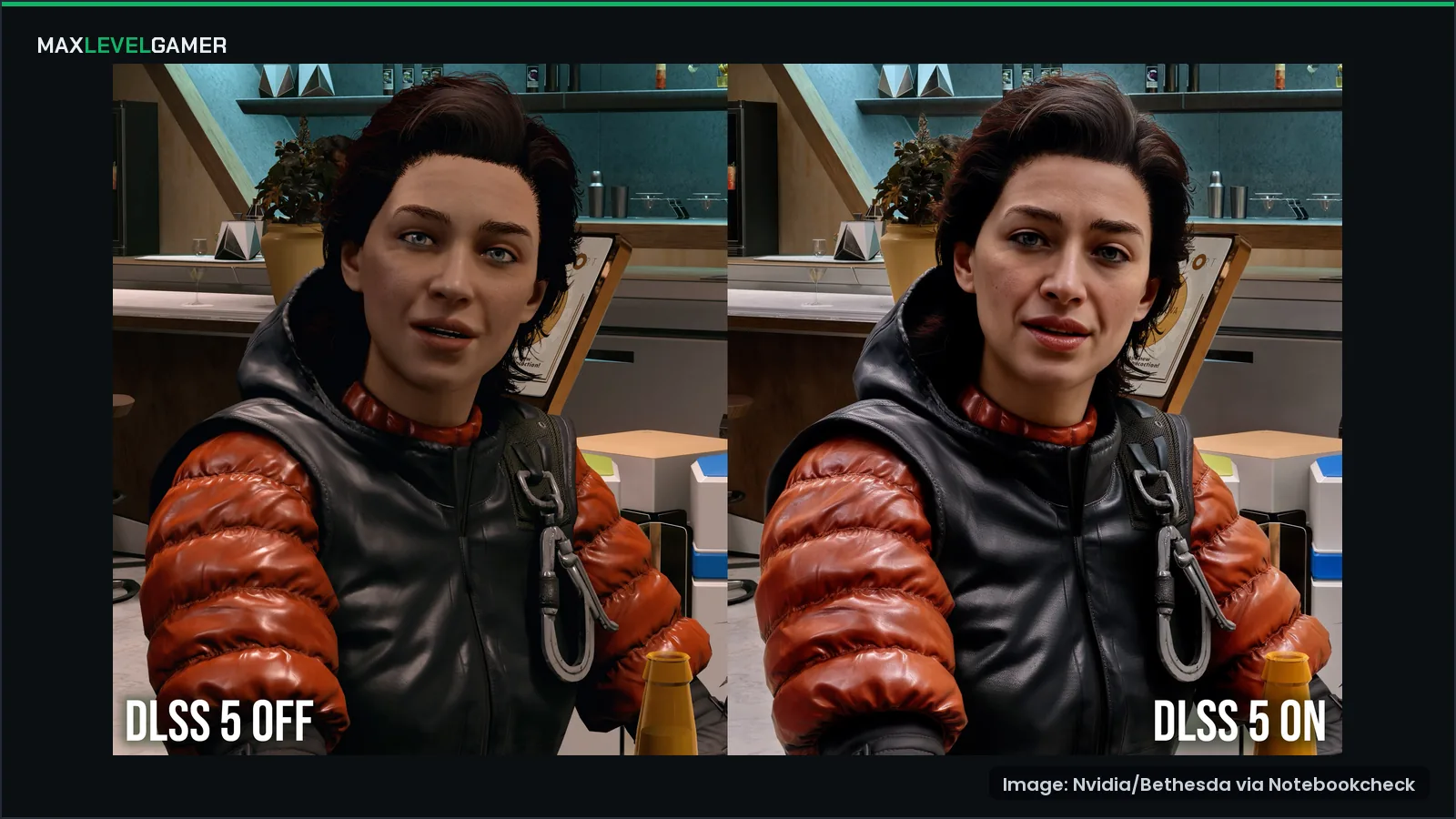
First, bin everything you know about DLSS as that thing that makes a lower resolution look sharper. This isn’t that. DLSS 5 is neural rendering, which is a fancy way of saying it takes the raw colour and motion data from every frame and repaints the scene’s lighting and materials to look closer to a photo than to a rendered game. Subsurface scattering on skin, the sheen on a leather jacket, the way afternoon light dribbles through leaves. That kind of thing.
Jensen Huang was very keen to stress it’s not a filter bolted on at the end. His exact framing was generative AI fused with the geometry and textures. In plain terms: the scene isn’t being polished, it’s being partly reimagined, live, while you play. Which is either thrilling or slightly terrifying depending on how much you trust an algorithm with an artist’s job. (We’ll get to that.)
The catch you absolutely knew was coming
It needs an RTX 50-series card. Full stop, no negotiation. RTX 40 owners are not on the guest list, and yeah, if you dropped a small fortune on a 4090 not that long ago expecting it to stay relevant, that one’s going to sting. We’re sorry. We’re a little annoyed on your behalf, honestly.
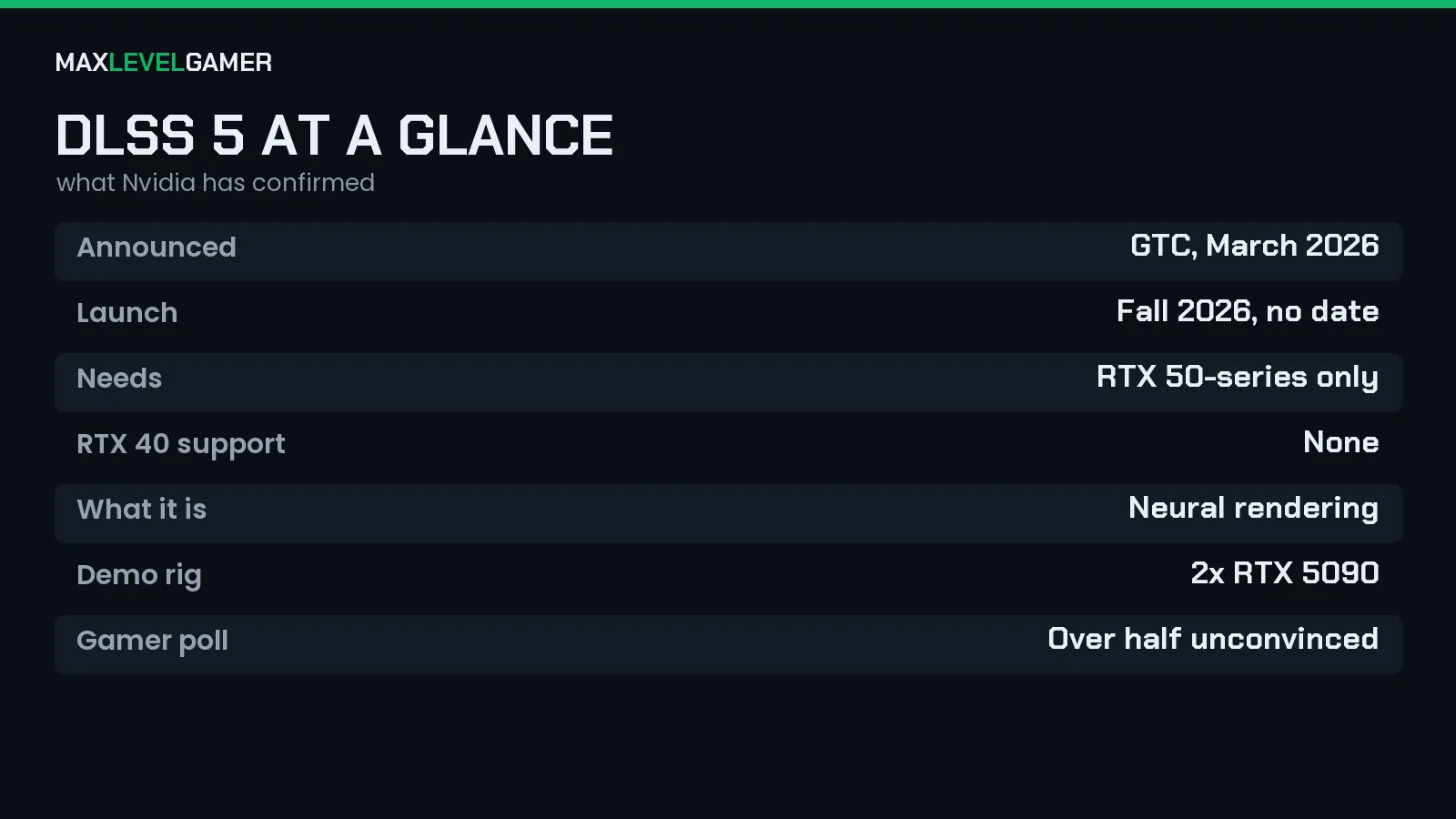
The demo Nvidia ran at GTC used two RTX 5090s. Two. That’s somewhere north of 4,000 dollars in graphics silicon just to show off a feature the company swears will run on a single card by launch. We’d love to believe that. We’re also old enough to have heard “it’ll run great on one card, trust us” before. As for timing, all we’ve got is Fall 2026 and a shrug. GTC Berlin in October is the likely stage for the real reveal.
Why we’re not sold yet
Here’s where the arms stay folded. When Nvidia showed this off, more than half the players polled came away unconvinced (count us in that half), and the internet did what the internet does and immediately christened it the AI filter. The nickname stuck because it’s a little bit true. One Starfield demo had the neural pass smoothing textures like an overenthusiastic Instagram filter, quietly scrubbing away the deliberate grit and grime Bethesda spent ages putting in.
And that’s the whole problem in a nutshell. When your shiny new tech makes a game look less like what the artists actually intended, that’s not an upgrade. That’s a disagreement. A very expensive one.
The tech is real and the demos are striking. But handing an algorithm the keys to a game’s art direction is a bold, slightly nervy move.
Our take? DLSS 5 could be genuinely brilliant in the right game and a total menace in the wrong one. A grimy survival horror does not want its shadows softened and its rust politely tidied up. It wants to look like something’s about to eat you. So we want to see this running on one card, in games we actually know, before anyone gets to call it the future. Until then: promising, keep the receipts, watch this space.
Thinking about a card to run any of this on? Read our 2026 GPU value guide before you spend a penny, because oof, the prices.