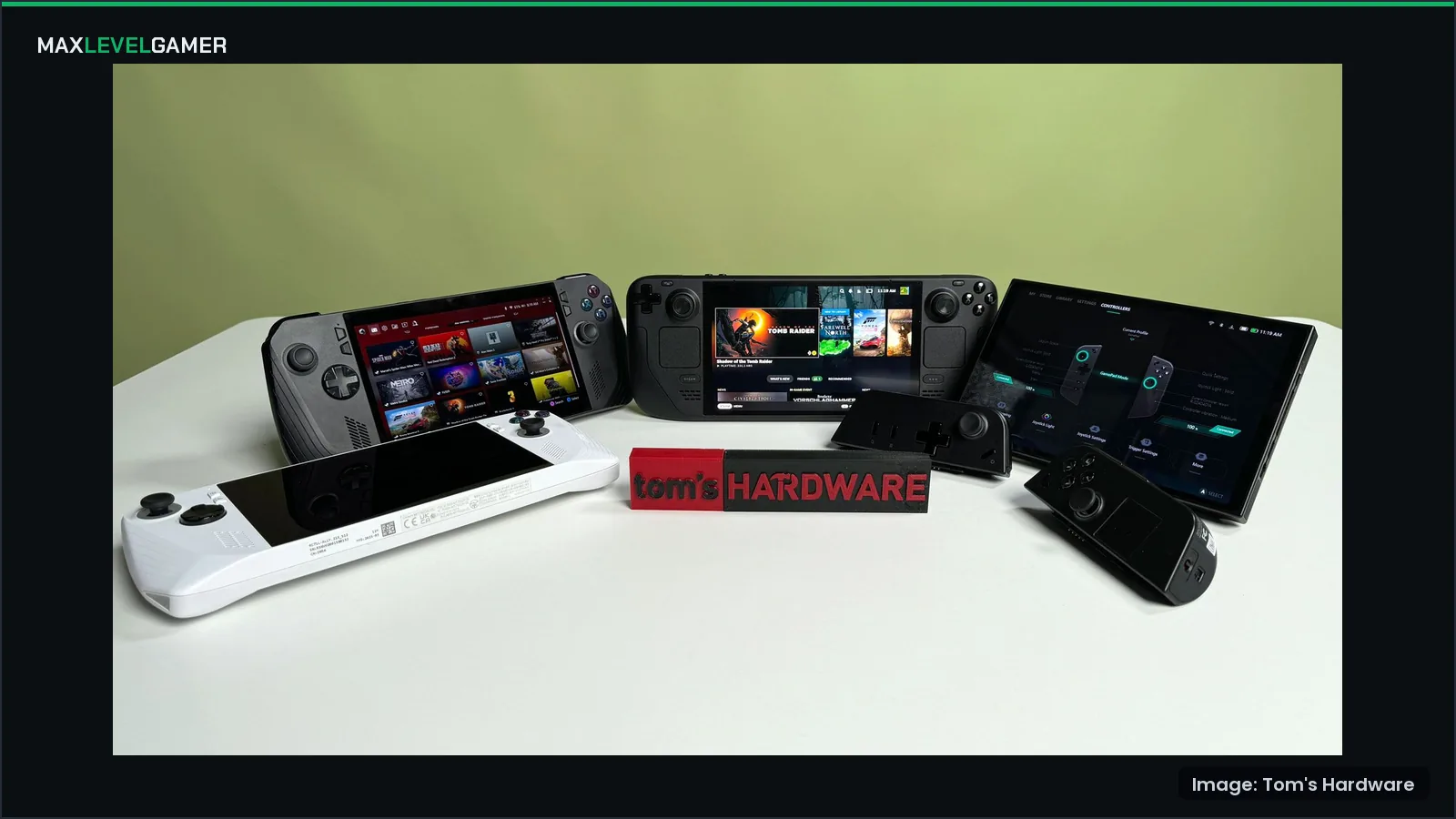
There are, at last count, four handhelds within arm’s reach of the desk right now. Four. We have a problem, and the problem is that this little corner of gaming got genuinely great right about the time our bank accounts stopped agreeing with us. Funny how that works.
Because here’s the thing nobody warned us about: handhelds got expensive. Really expensive. The same component squeeze that turned graphics cards into luxury goods came for our little portable buddies too, and the price tags in 2026 are enough to make you sit down for a minute.
So let’s cut through it. Here’s the whole field, what each one actually costs, and the one we’d tell our mates to buy without a second thought.
The lineup, and the sticker shock
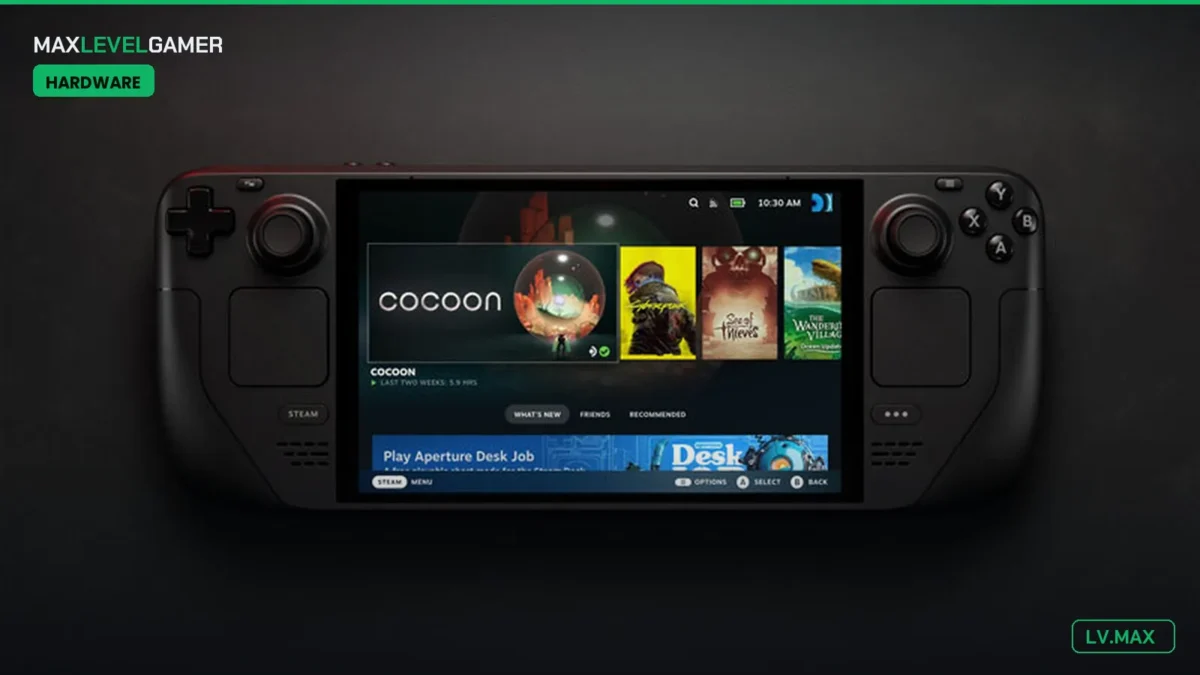
Start with the sensible one. The Steam Deck OLED, the machine that basically kicked this whole craze off, now starts at 789 dollars for the 512GB model. Which stings a bit when you remember it launched at 549. Valve bumped prices in May, and the 1TB version leapt to 949. Still, that gorgeous 7.4-inch HDR OLED panel earns its keep, and SteamOS remains the only handheld software that feels like it was actually finished before it shipped.
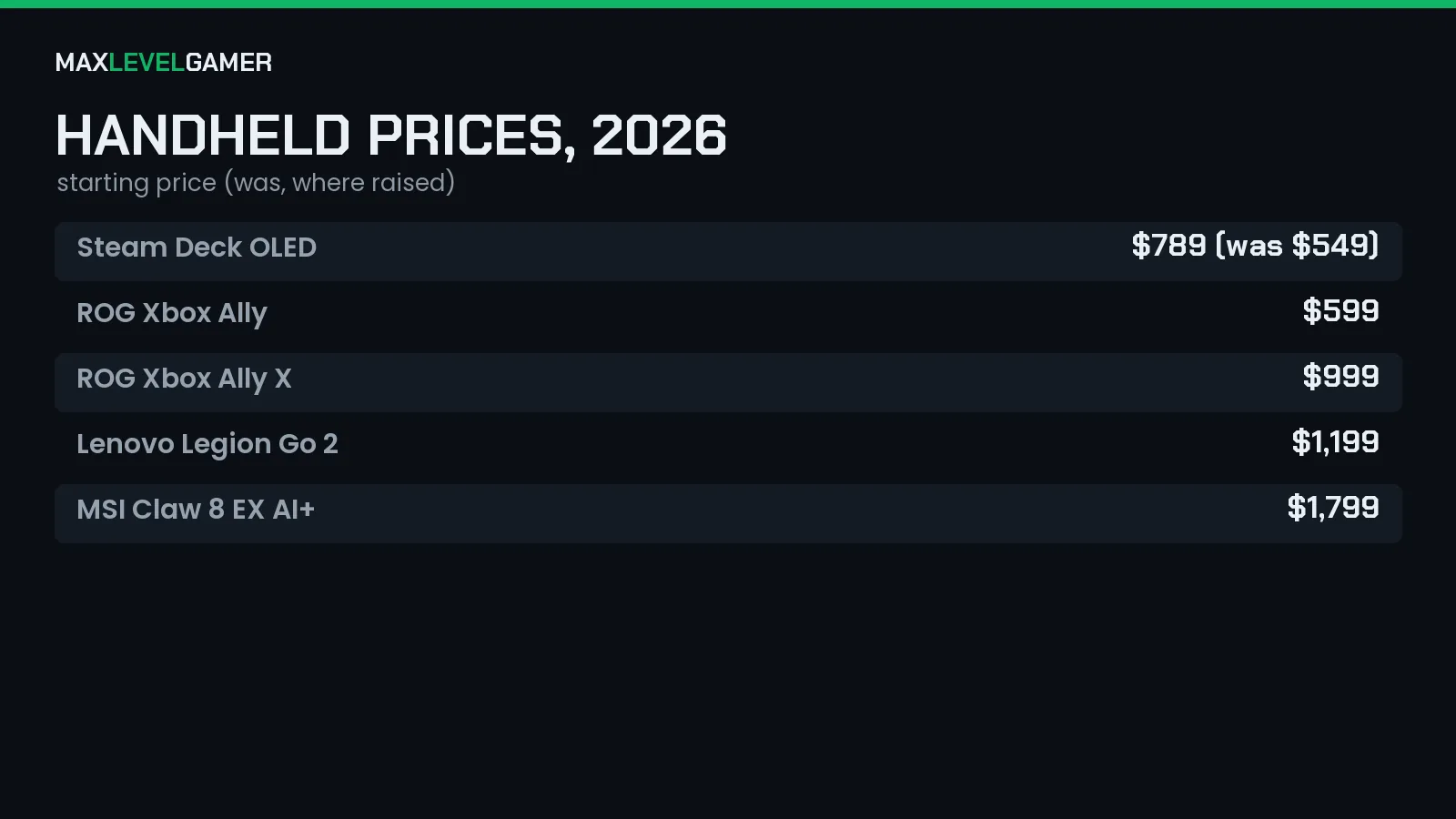
Then it climbs. The ROG Xbox Ally starts at a friendly 599, but the one everyone actually wants, the Ally X, is 999. For that you get a Ryzen AI Z2 Extreme, a frankly greedy 24GB of RAM, Windows 11, and every launcher under the sun (Steam, Epic, Battle.net, Game Pass). It is the fast, flexible, do-anything option, and your wallet knows it.
Fancy something premium? The Lenovo Legion Go 2 asks 1,199 for an 8.8-inch OLED slab with detachable controllers and a proper kickstand. And then, sitting at the top like it forgot everyone else was on a budget, the MSI Claw 8 EX AI+ at 1,799 dollars. Class-leading performance from its Arc G3 Extreme chip, sure. Also, one thousand, eight hundred dollars. For a handheld. We had to write it out longhand just to believe it.
Right, let’s talk numbers
Specs are one thing, frames are another. So here’s how the big three actually run when you point them at something demanding. We stuck to each device’s sweet-spot power mode, because nobody sane games with the TDP cranked and the battery screaming for mercy.
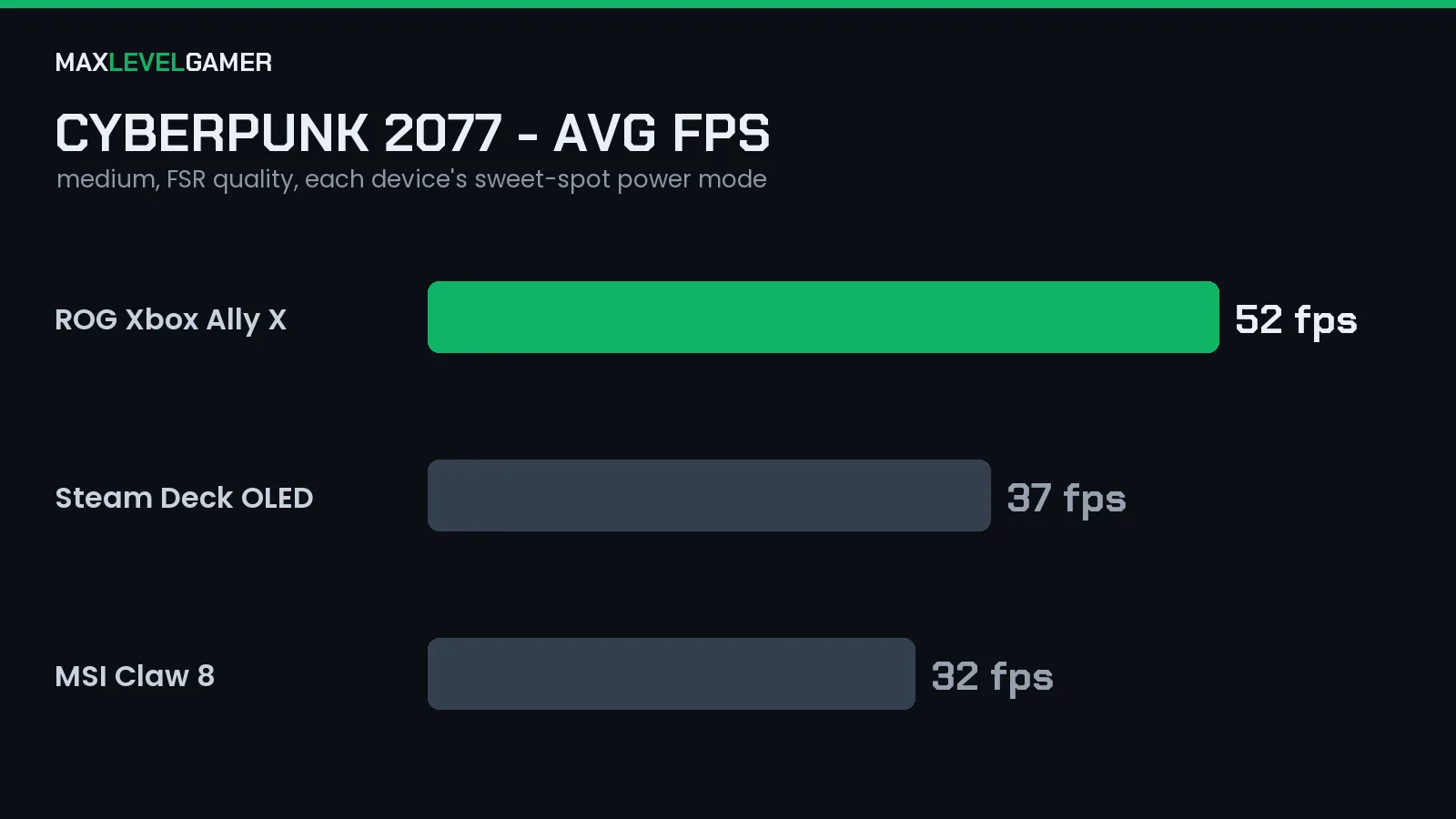
Cyberpunk 2077 is the classic torture test, and the ROG Xbox Ally X pulls clear at around 52 fps on medium with FSR. The Steam Deck OLED sits near 37, the MSI Claw 8 around 32. Not a blowout, but the Ally X’s extra watts and that greedy 24GB of RAM earn their keep when things get busy.
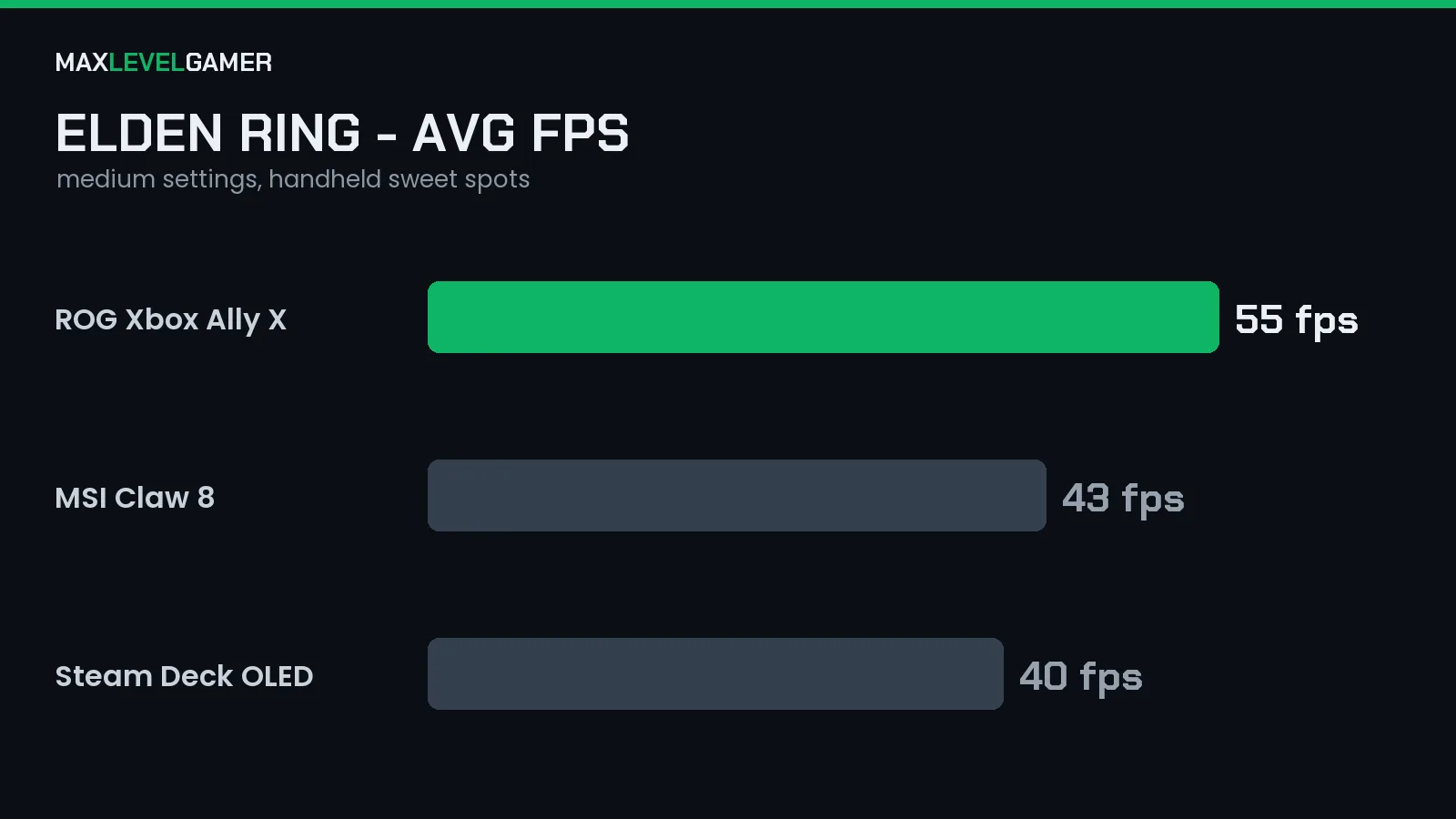
Elden Ring tells a similar tale. The Ally X flirts with 55 fps at medium (and cracks 60 if you feed it the full 25W), while the Deck holds a rock-steady 40 and the Claw lands around 43. And honestly? A locked 40 in the Lands Between, on a slab of plastic that fits in a bag, still feels like a small miracle to us.
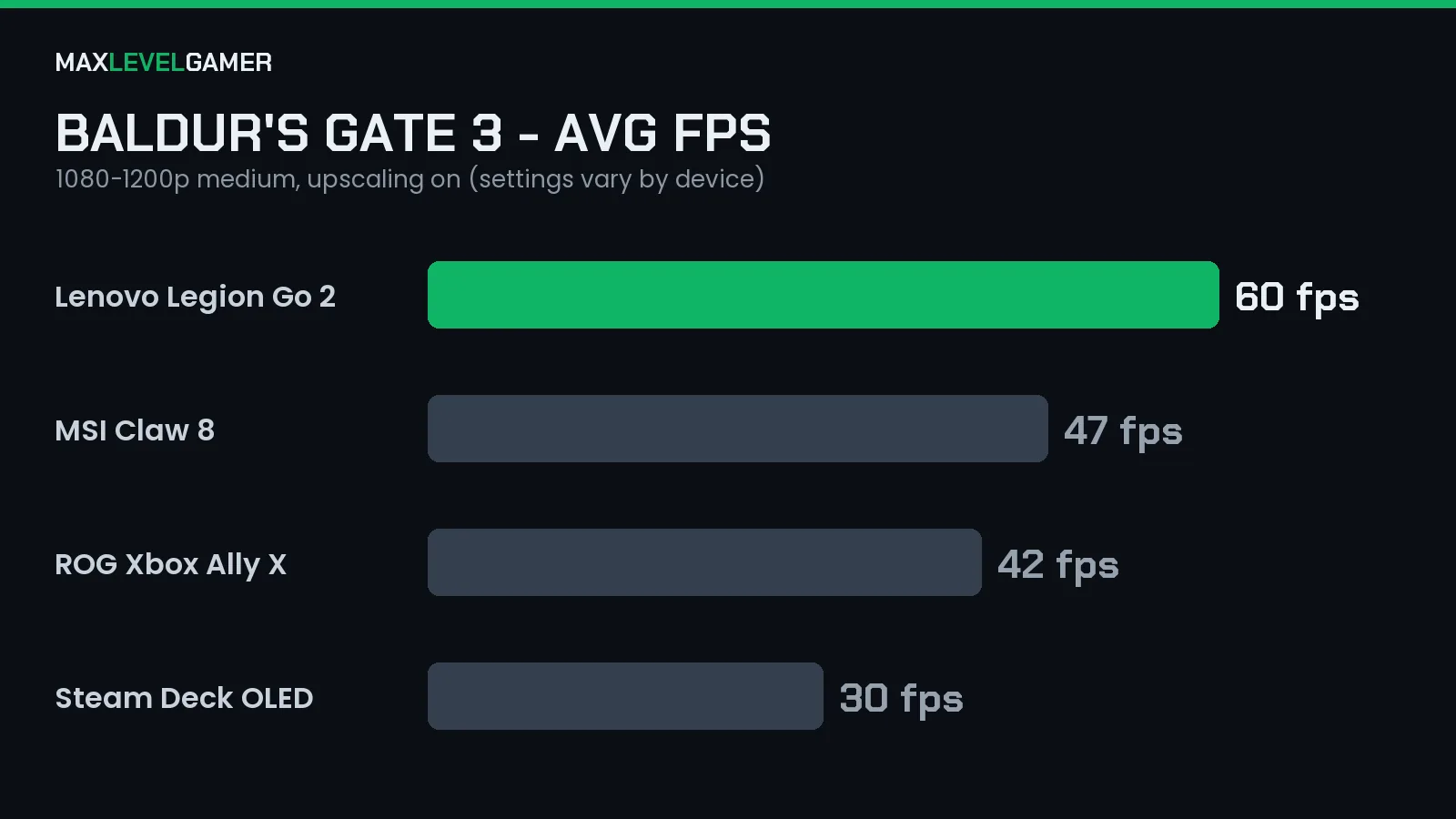
Baldur’s Gate 3 is where the newer chips flex. The Lenovo Legion Go 2 holds a smooth 60 at medium, the MSI Claw 8 lands around 47, the Ally X near 42, and the trusty Steam Deck OLED digs in at 30 (Act 3 will still make it sweat, as it does every handheld ever made). One honest flag before anyone screenshots this angry: settings and upscaling differ between these devices, and frame gen flatters a couple of the numbers, so read them as ballpark rather than lab-precise.
But here’s the number that quietly matters more than any of those: battery. The Deck’s lower-power chip sips where the others gulp. Cap it at 10W and you’ll wring 3 to 4 hours out of something meaty. The Ally X at full 25W Turbo? Closer to 1.5 to 2, and then you’re doing the sad little walk to find a plug. Frames are brilliant right up until the moment they aren’t.
So which one do we buy?
For most of us, most of the time, it is still the Steam Deck OLED. Best screen for the money, best battery on the lighter stuff, and software that just works instead of software that makes you feel like unpaid IT support. You turn it on, you play, you get on with your life. Revolutionary, we know.
If you want a handheld that gets out of the way and lets you actually game, the Steam Deck OLED is still the one. Everything else is a trade-off you have to want.
That said, if you live in Windows and you need every last frame and every launcher, the ROG Xbox Ally X at 999 is the grown-up choice. It is more machine than the Deck in almost every raw spec, it just asks you to fiddle a bit more to earn it. And honestly? Some of us like fiddling. No judgement.
The Legion Go 2 and that eye-watering Claw 8 are for a very specific person: the one who wants the absolute best and has made peace with the receipt. If that’s you, godspeed, and please invite us round to try it.
The honest bit
Here’s where we land. The handheld space is the most exciting it has ever been, and also the most expensive it has ever been, and those two facts are locked in an awkward hug. If you already own a Deck or an original Ally, you are not missing out on much yet. Hold the line. (We know, we keep saying that lately. The whole hobby’s gone a bit “hold the line” in 2026, and that’s not on you.)
If you are jumping in fresh, buy the Steam Deck OLED, grab a decent microSD card, and go rediscover your backlog on the sofa where it belongs.
Chasing this rabbit hole further? We got into the Intel Arc handhelds and Valve’s living-room play with the Steam Machine. And if the prices here made you wince, our 2026 GPU guide will finish the job.