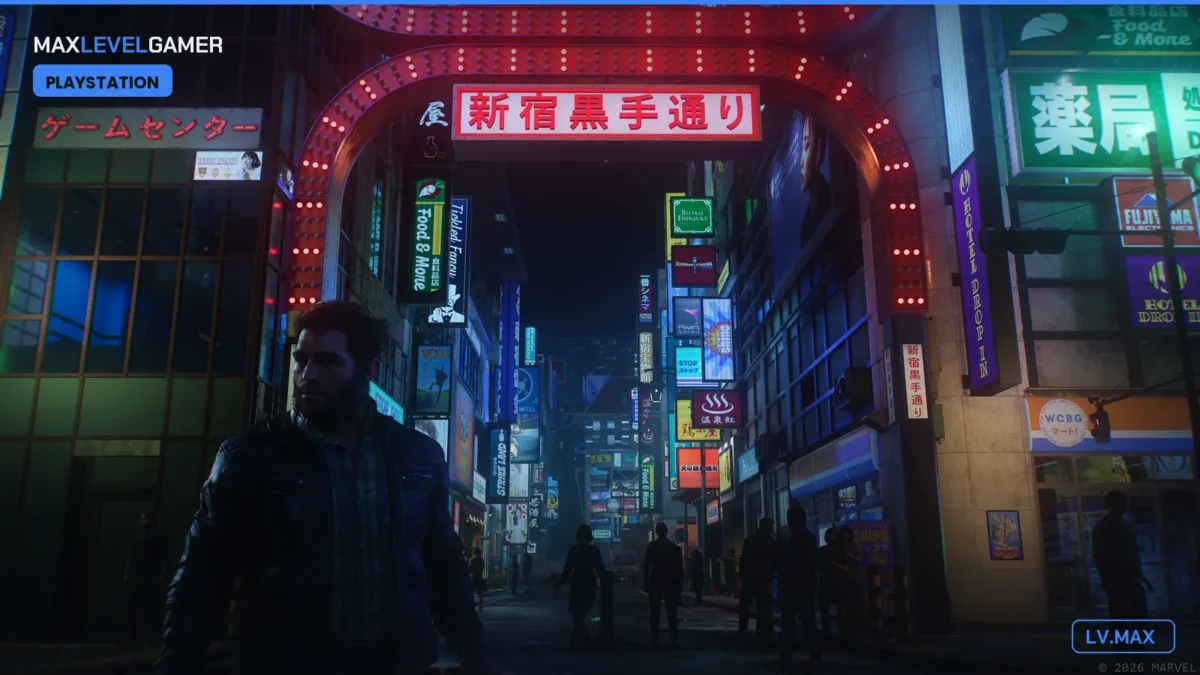
I was halfway through a Wolverine session last night, the launch-day PS5
humming away under the telly like a small jet engine, when the patch
notification popped up. Then I read the words “Quick Spectral Super
Resolution” and put the controller down, because that is the thing. That is
the toy. The one we have all been pretending not to care about since the Pro
came out and our mates started posting screenshots with suspiciously crisp
foliage.
So here is what happened today, 1 October 2026, and what it means for the tens
of millions of us who bought a normal PS5 and never fancied spending Pro
money. Sony dropped an official PlayStation Blog post announcing QSSR, an AI
image upscaler built specifically for the base PS5. It went live today through
patches for Marvel’s Wolverine and Ghost of Yotei, and Sony says it is now
available for every PS5 developer to implement going forward. It came out of
Project Amethyst, the collaboration between PlayStation and AMD that gave us
PSSR on the Pro in the first place.
And because the obvious question is “right, but is it as good as the Pro’s
thing, or DLSS,” we are doing this as a three-way scrap. QSSR in the blue
corner, PSSR in the slightly more expensive blue corner, and DLSS over on the
PC side wearing a leather jacket and refusing to make eye contact.
Why the base PS5 crowd has been sulking
Let’s be honest about the last couple of years. When the PS5 Pro landed with
PSSR, the pitch was that the Pro got a dedicated AI upscaling pass that
cleaned up image detail and stabilised all those shimmering edges that the
older reconstruction would leave wobbling in the distance. If you were on a
base console, you got nothing new. Your games were still fine. But there was
this quiet sense of being on the wrong side of a velvet rope, especially when
a mate with a Pro would lean over and say “oh, you can really see the
difference on the grass” in that voice. You know the voice.
Most of us never upgraded, because a Pro is a lot of money for a console we
already own. That is the whole point of today.
QSSR: the streamlined version, by Sony’s own admission
This is the bit I want to get right, because it would be easy to overhype.
Sony is not claiming QSSR is PSSR. Their own rep, a chap named Craig,
described PSSR as the thing that “remains the gold standard on PS5 Pro,” while
QSSR is a streamlined, hand-tuned neural network built to run on the base
PS5’s hardware. His exact framing was that it brings “notable improvements to
both image detail and image stability” on the standard console. Read that
twice. Detail and stability. Not “it turns your launch PS5 into a Pro.” Sony
is being refreshingly straight about this being a tier below.
And frankly that is the correct way to position it. The base PS5 does not have
the Pro’s extra GPU grunt or its custom machine-learning hardware, so whatever
Sony and AMD cooked up in Project Amethyst had to be lean enough to run on
silicon that was never designed with a neural upscaler in mind. “Hand-tuned”
is doing a lot of work in that sentence, and I suspect it means a smaller,
more specialised network that trades some of PSSR’s headroom for the ability
to actually fit in the frame budget. Which, for us, is the only version that
matters. A gold-standard upscaler that we cannot run is a brochure, not a
feature.
We do not have numbers yet, and we are not going to pretend we do. No fps
figures, no “it’s 73 percent of PSSR” nonsense. What we have is two patched
games and a promise that the tool is on the shelf for every developer.
Real-world results will vary per game, depending on how much care each studio
puts into tuning it. That is the honest caveat and it is a big one.
PSSR: still the one with the nicer sofa
The Pro’s PSSR stays where it was: the best image-reconstruction tech on a
PlayStation. If you already own a Pro, nothing about today takes anything away
from you. PSSR gets to lean on hardware that was built for it, which means it
can afford a heavier network and more aggressive cleanup of the image.
The interesting wrinkle is that QSSR narrows the gap in the thing most of us
actually notice, which is image stability. Shimmer, crawling edges, fizzing
hair and foliage, all the stuff that makes a game look “console-y” in the bad
sense. If QSSR genuinely calms that down on a base PS5 in a well-patched game,
then the Pro’s advantage becomes more about fine detail and raw frame
headroom, and less about “my game looks clean and yours looks like it is
vibrating.” That is a meaningful shift in what the Pro is actually buying you.
Pro owners: your toy is still the best toy. Ours just arrived.
DLSS: the thing we all secretly compare everything to
Over on PC, Nvidia’s DLSS is the reason this whole category exists. It needs
an RTX card, which rules out every console on earth, but if you have one it
has been the reference point for AI upscaling for years. (We went deep on the
GPU side in our
RTX 5090 and the cards before it
piece if you want the PC context.) DLSS has had the longest head start, the
most generations of refinement, and the benefit of dedicated tensor hardware
on every card that supports it.
So how does QSSR stack up against that? Qualitatively, and I want to stress
qualitatively because nobody has done the side-by-side yet, it is the same
idea executed under far tighter constraints. DLSS runs on hardware
purpose-built for it in a box where the user can throw more silicon at the
problem whenever they like. QSSR runs on a fixed console from 2020 that Sony
and AMD had to teach new tricks after the fact. Expecting parity would be
daft. But the point was never parity. The point is that the PC crowd has been
able to say “just turn on DLSS” as a casual fix for years, and now there is
finally an equivalent sentence we can say on a base PS5 without it being a
joke. That matters more to me than winning a pixel-peeping contest I was never
going to enter.
Also, and I say this with love for my PC-owning colleagues, DLSS requires a
graphics card that costs more than my entire console. QSSR cost me a patch
download.
Who actually wins here?
On pure image quality, DLSS and PSSR are almost certainly up top with QSSR
behind them, and that is fine, because that is exactly what Sony told us to
expect. On the “who does this change things for” axis, QSSR wins by a mile.
PSSR improved things for the people who paid for the premium model. DLSS
improved things for people with expensive GPUs. QSSR is the first of the three
that improves things for the rest of us, the lot who bought the normal box at
launch and have been quietly happy with it ever since.
Two games today is a tiny sample. We will be watching which studios bother.
Last night I ended up loading Ghost of Yotei straight after Wolverine, just to
stare at the grass like a lunatic. I could not tell you with certainty what I
was seeing, because my eyes are not a frame analysis tool and I had already
had a glass of wine. But I sat there a bit longer than I meant to, and the
horse ride into the mountains felt a touch calmer around the edges, and for
the first time in two years I did not think about the Pro at all. That is
probably the whole story, if I am honest. Now excuse me, I have some grass to
go and stare at again.