There is a joke going round the office at The Coalition right now, and nobody
who tells it is laughing properly.
The joke goes something like this. You spent the last few years of your life
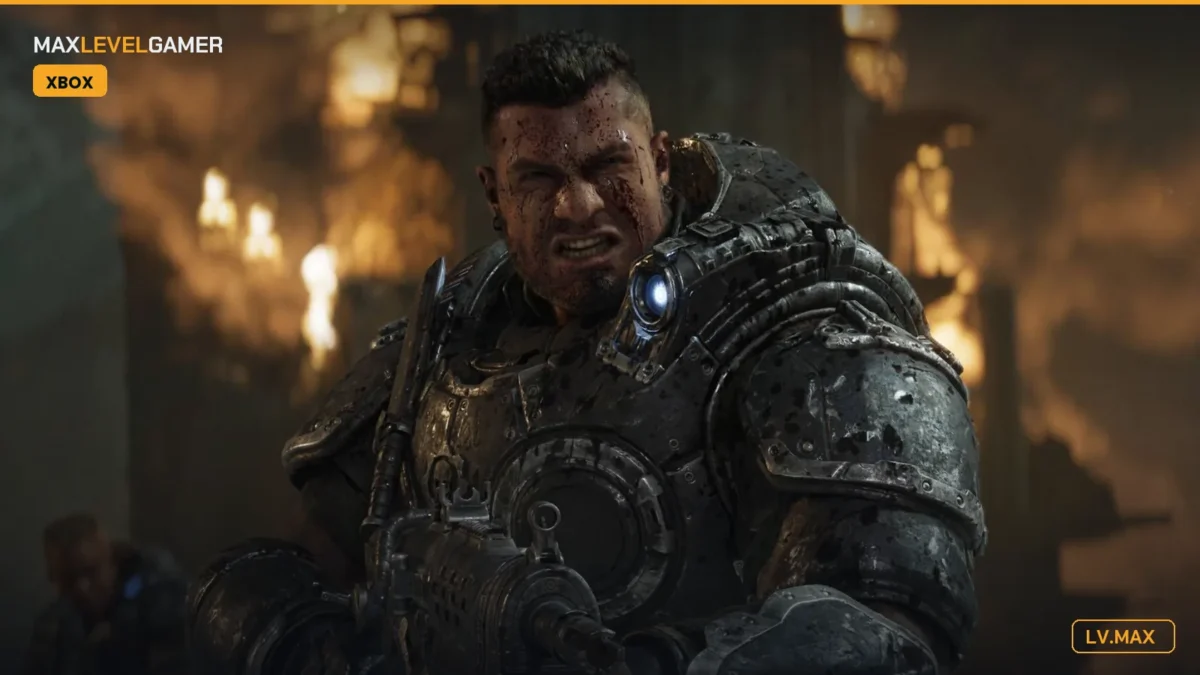
building Gears of War: E-Day. It came out. Critics put it at 88 on Metacritic,
from roughly fifty reviews, which makes it the best-scored Gears since the
original Epic trilogy and comfortably above Gears of War 4 and Gears 5, both
of which sat at 84. You did it. The series is back. And there is reportedly a
bonus in your contract tied to hitting an undisclosed Metacritic number,
expected to pay out towards the end of October, with one condition: you have
to still be a full-time employee on the day the money actually lands. So the
punchline, the bit that has apparently become a grim little refrain around the
studio, is that Xbox could lay you off before the cheque clears and never have
to pay you for the thing you just made.
That is the morbid joke. We would quite like it to stop being funny.
What they actually pulled off
Let us sit with the first half of this for a second, because it deserves more
than a sentence. Gears has been a series running on fumes and nostalgia for a
long stretch now. Gears 4 was competent, Gears 5 was ambitious in places and
baggy in others, and both landed on that respectable-but-unloved 84 that tells
you a studio did its job without anyone falling off their chair. E-Day was a
gamble in the proper sense: a prequel, a return to the grime and the dread of
the first game, a bet that people wanted the series to feel heavy again rather
than bright and open-world-adjacent. We have been playing it this week and the
honest answer is that the bet paid off. The chainsaw feels like it weighs
something, and the Locust feel like a nightmare rather than a faction. An 88
is not a fluke number, it is a crowd of critics agreeing that The Coalition
finally made the game they have been circling for a decade, and we agree with
the crowd for once.
So that is the achievement. Hold onto it, because the rest of this piece is
going to try to take it off you.
The clause
Here is the part that turns our stomach. Reports out of Vancouver say staff
are frightened of layoffs landing right after launch, tied to the cuts
Microsoft is planning before the end of its fiscal year. On its own that is
depressing but familiar. What makes the Gears version uniquely nasty is the
timing of that bonus. The payment is contracted for near the end of October.
Employment on the day of payment is the condition. Which means that for a
window of a few weeks, every person at that studio is doing a quiet bit of
arithmetic in their head: is it cheaper for Xbox to keep me until November, or
to let me go in October and save the bonus?
We want to be fair to the suits here, genuinely, because our rule is empathy
for the people making the games and the people paying for them. Nobody has
gone on record saying the layoffs are being timed to dodge the bonus. It is
entirely possible the two things are unrelated, that the fiscal-year cuts were
always coming and the bonus date is a coincidence, and that the fear on the
floor is just the fear of people who have watched colleagues get walked out of
too many buildings. That would still be bad. But it would be ordinary bad.
The problem is that the structure itself is the insult. If you write a
contract that says “you get paid for the game’s success only if you still work
here when we decide to pay you,” and you also hold the power to decide whether
they still work there, you have built a machine that rewards you for firing
people at the worst possible moment. Whether anyone pulls the lever is almost
beside the point. The lever exists. The devs can see it. And so the
best-reviewed Gears in fifteen years is being celebrated by a team that is
checking the calendar instead of opening champagne.
Juan Vaca went gold and then went home
If you want proof that this is not paranoia, look at the story director. Juan
Vaca, the person responsible for the narrative spine of a game critics are now
praising for its narrative spine, was laid off after E-Day went gold. After.
The disc was done, the work was finished, the thing was in the can, and then
the person who shaped it was shown the door before anyone had read a review.
Reports say the departures since have gutted morale, and honestly, how could
they not? You cannot tell a team “your work matters” on Monday and then remove
the person whose work mattered most on Tuesday and expect anyone to believe
the Monday speech.
There is a specific cruelty in laying off a writer once the story is locked.
The game ships with their fingerprints on every scene and their ideas quoted
in reviews. And they are watching it from outside.
We hope he reads the scores. We hope they feel like something.
Why does this keep happening to the good ones?
Because that is the pattern now, and it is the bit we keep coming back to. The
studios getting cut are not the ones shipping duds. We covered the cuts at
Bethesda hitting the team on
Elder Scrolls 6, a game the entire industry is waiting for, and we covered
Build a Rocket Boy closing its doors
with a team full of people who had already proven they could ship. The common
thread is not quality. The common thread is a spreadsheet somewhere that
treats a finished game as a cost that has already been incurred and the people
who finished it as a cost that can still be avoided. We wrote about this as
the
financialisation of AAA
when it was Halo on the slab, and the Gears situation is the same disease with
a fresher wound: a success is being processed through the same machinery as a
failure, and the machinery does not care which one it is.
And look, we understand the counterargument. Big companies do fiscal-year
planning. Not every layoff is a villain twirling a moustache, sometimes it is
a middle manager with a target they did not set.
But a target is a choice. A clause is a choice. A date is a choice.
What we owe them, and what we can actually do
This is where the long dinner conversation usually goes quiet, because the
honest answer to “what can we do about it” is “not much, individually.” We are
gamers writing on a gaming site. We do not sit on the Xbox board. But we can
at least refuse to let the two halves of this story get separated, because
that separation is how it gets laundered. The press cycle wants to run “Gears
is back, 88 on Metacritic” one week and “Xbox trims headcount” a month later,
as if they are unrelated news items about unrelated people. They are the same
people. The 88 was made by hands that are now hovering over LinkedIn.
So buy the game if you want it; we think you will like it, and sales going
well is the only language the spreadsheet speaks. But say the quiet part when
you recommend it. Tell your mates it is brilliant and that the studio that
made it is scared of being fired before they get paid for it. Make the second
sentence as loud as the first. Credits exist for a reason, and the people in
them deserve to be in the building when the good news arrives.
The joke at The Coalition only works if everyone already assumes the worst.
The least the rest of us can do is notice when the worst actually happens, and
say so, by name.