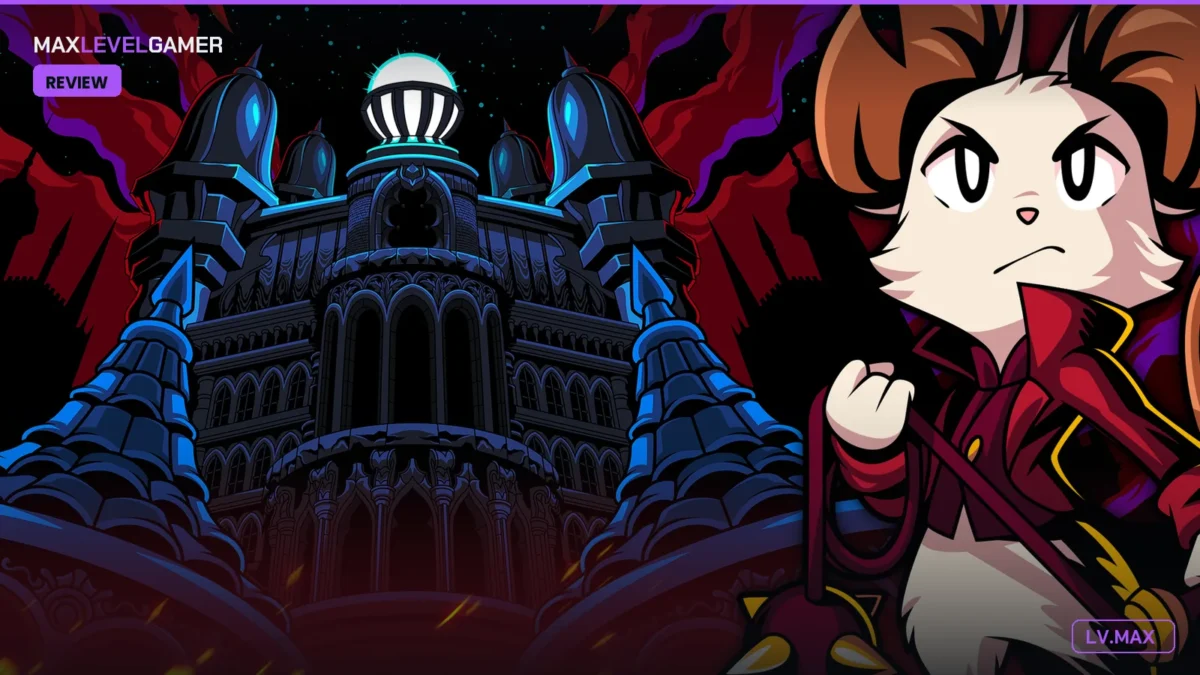
Buy Mina the Hollower. It is the best twenty quid we have spent on a game this
year, and if you grew up with Link’s Awakening and later fell for Bloodborne,
it is the game you did not know you were waiting six years for. It is also
hard, grindy in the first few hours, and a bit mean about bottomless pits, so
the people who should skip it are the ones who want a cosy retro throwback to
relax with. This is not that.
The numbers back us up. At the time of writing, Mina sits on a
90 Metascore with the Must-Play badge
across 74 reviews, and it peaked at 93 in launch week when
Push Square rounded up the first 32 reviews. IGN, RPG Site and TheGamer all gave it 10/10. The Guardian gave it full
marks. OpenCritic has it on a 91 average with 97% of critics recommending it,
per its own listing (we could not pin an exact capture date on that figure, so
treat it as roughly right). It sold
half a million copies in about ten days, which Yacht Club’s Sean Velasco had previously called the “golden” number
for a studio he described as being in a make-or-break spot.
So yes, the hype is real. Here is what we actually wanted to know going in.
Is it just Link’s Awakening with a whip?
No, and that is the first thing you learn, usually by dying. The Game Boy
Color look is faithful, right down to four-directional movement and attacks,
and the first two hours fight you because of it. Diagonal enemies will clip
you while you line up a whip crack. But under the skin this is a stamina-free
Souls-like in a Zelda overworld. You collect Bones as currency, you drop them
when you die, and if you die again before you pick up your Spark, they are
gone for good. Sidearms get lost on death too until you unlock a base upgrade
that fixes it. We lost about 1,400 Bones in Nox’s Bayou on our second evening
and were genuinely annoyed, in the good way.
The Zelda comparison stops mattering by the third dungeon.
Does the burrowing ever get old?
It did not for us, and we expected it to. Burrowing is a dodge roll, a
traversal tool and a puzzle verb all at once. You tunnel under a swing, pop up
behind the enemy and crack the Nightstar whip while they are still recovering.
You tunnel through the circuits on Spark towers to reroute power. You tunnel
under forest canopy to find paths the map does not show. Later enemies learn
to punish it, with ground slams and area attacks that hit you underground, so
the mechanic stays honest instead of becoming a free escape. The
Jump Dash Roll review
says the same, and we agree that the game never lets burrowing become a reflex
you stop thinking about.
Does the combat have enough depth for 25 hours?
Here is the long answer, because this is where the game earns the score. The
Nightstar is the default and it stays viable to the credits, but it rewards
spacing, and spacing is exactly what a four-directional game makes awkward.
The Blaststrike Maul is slow and wrecks everything in front of it, which made
the knockback-heavy enemies around Septemburg far more manageable for us.
Whisper and Vesper, the twin daggers, are for people who want to stay in an
enemy’s face and burrow out at the last second, and we swapped to them for the
whole back third of the game. Then there are sidearms: a throwing axe for
cheap ranged damage, a coffin shield whose parry triggers a counter, a
throwable portal that is more defensive than it looks, a bicycle mount that is
mostly silly, and a floating minion that chomps enemies and then explodes.
Trinkets layer passive effects on top, and the one that spawns a healing buddy
when you get hurt carried us through two bosses. Bones level three stats.
Every one of those choices changes how a room plays. By hour 20 we were still
rebuilding our loadout before bosses, which is more than we can say for most
games in this genre, retro or otherwise.
Depth, yes. Variety in enemy design, mostly yes. Nobody will accuse the
Southern Outskirts of being memorable, though.
Are the bosses as good as the Shovel Knight ones?
Better, with a caveat. There are more than 25 bosses and minibosses across
Tenebrous Isle, six of them guarding Spark Generators, and the showpieces are
properly great. The Duchess of Queensbury in the Crypt is a multi-phase fight
that taught us the shield parry whether we liked it or not. The chasing boss
in Septemburg that cannot be killed and can throw you back to the start of the
area is tense in a way pixel art has no right to be. We died to the second
generator boss more times than we are going to admit in print. The caveat is
one
Giant Bomb’s 3.5/5 review
makes and we half agree with: a few fights are tuned for a faster character
than Mina is, so the slow whip turns them into memorisation tests rather than
reaction tests. Switching weapons fixed that for us more often than not. It
will not fix it for everyone.
Fan-made wikis list nine hidden bosses on top, each tied to a side quest. We
found four. We believe the number, but we cannot confirm it ourselves yet.
Can you turn the difficulty down without ruining it?
Yes, and this is the most quietly impressive thing Yacht Club did. There is no
easy mode. Instead there are sliders and toggles for incoming damage, item
potency, Mina’s movement, healing speed, and whether pits do damage or just
reset you. We played with everything default apart from one evening where we
turned off pit damage in Septemburg because the wind and lightning-rod
gimmicks were testing our patience, and the game did not nag us about it or
lock anything.
GamingBolt’s 8/10
dings those same pits and the awkward disengage-to-drink-a-vial healing, and
we felt both, but the settings menu is the answer the game already provides.
Is 20 quid too cheap for what you get?
Honestly, a little. It is $19.99 and £17.75, and
Shacknews puts a first run at 20 to 30 hours, which matches our 30-ish with side content. Switch owners get the Switch 2
Edition upgrade free. The soundtrack is name-your-price on Bandcamp. Yacht
Club has said they were hoping for a million sales, and at this price we
understand why half a million was only the start of the target rather than the
finish line.
What we’d change
-
Let us quaff a vial without fully disengaging. One frame of invulnerability
on the drink would stop healing feeling like a punishment. -
Halve the Bones cost of restoring the trains. Fast travel should not be a
grind gate in a game that otherwise respects your time. -
Give the early hours a gentler on-ramp to the four-directional attack. The
first two hours lose people the game would have kept. -
Fewer bottomless pits in Septemburg specifically, or at least make the reset
point closer. The wind gimmick is enough on its own.