Virmire
Saturday afternoon, early 2008, a borrowed 360 and a telly that buzzed when
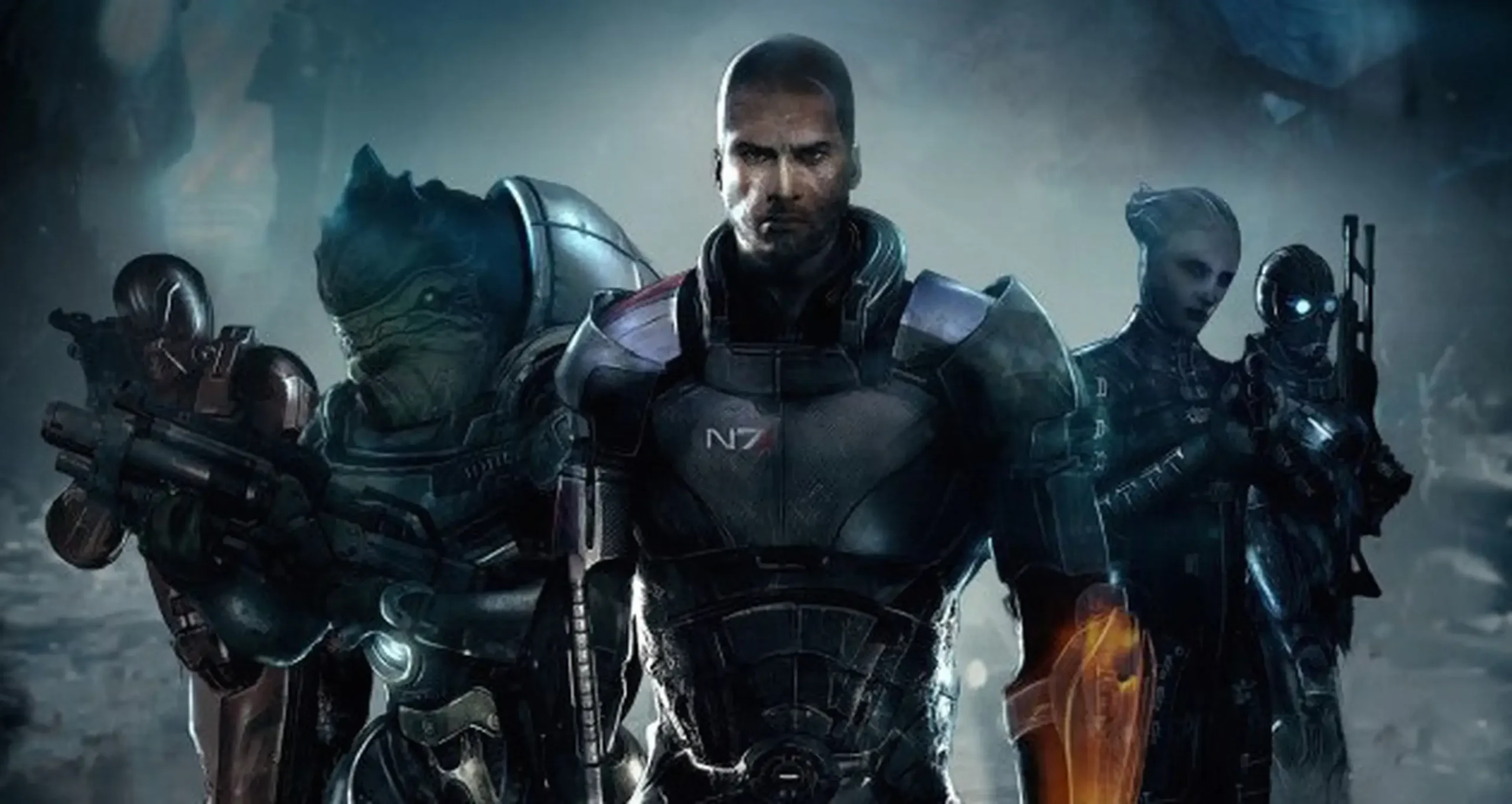
the brightness went too high. Virmire. Saren’s base is about to go up and the
game asks us, without any fanfare, which of two people we have spent twenty
hours with is going to die. We put the controller down. We actually got up and
made a cup of tea about it. Kaidan or Ashley. Nobody tells you in the manual
that this is the sort of thing a video game can do to you.
We left Ashley. We have never fully forgiven ourselves, and we never reloaded.
Edmonton
BioWare started in 1995 when three medical doctors in Edmonton, Ray Muzyka,
Greg Zeschuk and Augustine Yip, decided they would rather make games than
practise. Their first was a mech sim called Shattered Steel. Their second was
Baldur’s Gate, and that is where our story starts properly, because Baldur’s
Gate in 1998 took a tabletop ruleset most of us had only ever seen in a mate’s
basement and made it feel like a world. Then Baldur’s Gate II, then
Neverwinter Nights, then in 2003 Knights of the Old Republic, which quietly
delivered a better Star Wars story than the films showing in cinemas at the
time. Jade Empire. Mass Effect in 2007. Dragon Age: Origins in 2009. Mass
Effect 2 in 2010, which many of us still hold up as the best thing the studio
ever made.
Game Developer
ran through the full catalogue in its closure coverage, and reading it as a
list is a strange experience, because you forget how few studios have ever had
a run like that.
What held it together was not technology. BioWare games were often clunky. The
Mako handled like a shopping trolley on ice, Origins ran on an engine that
looked dated the week it shipped, and KOTOR still has a loading screen for
every door. What held it together was that these games treated us as people
who could carry a choice. Companions had arguments with each other in the
lift. The person you romanced remembered it two games later. Your Shepard was
your Shepard, and the save file was a diary.
October 2007
EA announced it was buying BioWare in October 2007, via the VG Holding Corp
deal that also swept up Pandemic Studios, with Wikipedia and most contemporary
coverage putting the total near $775 million. Mass Effect shipped the
following month. For a few years it looked like the best possible outcome: EA
money, BioWare’s hands on the wheel, and a release cadence that gave us Dragon
Age: Origins, Mass Effect 2 and 3, Dragon Age II and Star Wars: The Old
Republic inside five years.
Then the founders left in 2012. Then came the slow drift that former staff
have described in a dozen interviews since. Mark Darrah, who ran Dragon Age
for most of its life, has said publicly that the parent company’s push toward
live-service games distorted what the studio was allowed to make, and
PC Gamer
reported another Dragon Age veteran putting it more bluntly: 2017 was when EA
finished digesting BioWare. Mass Effect: Andromeda landed that March,
under-cooked and over-promised, and EA has never published its sales. Anthem
followed in February 2019, a Destiny-shaped thing nobody at the studio had
asked to make, and it sold a few million copies before EA abandoned the
planned overhaul in 2021. Casey Hudson and Darrah both walked in December
2020. Dragon Age: The Veilguard spent years as a live-service project before
being wrenched back into a single-player game, and when it finally shipped in
October 2024 EA told investors it had engaged roughly 1.5 million players in
the quarter, which
GamesRadar
noted was nearly 50% below the company’s own expectations. The studio was cut
down afterwards to a skeleton crew working on one thing: the next Mass Effect.
4 August 2026
EA stopped being a public company on 4 August this year. A consortium led by
Saudi Arabia’s Public Investment Fund, with Silver Lake and Jared Kushner’s
Affinity Partners, took it private at $55 billion in what
Game Informer
and others described as the largest leveraged buyout ever done. The important
word there is leveraged.
VGC
reports the company is now carrying around $18 billion in debt and had already
told lenders it would strip $700 million a year out of its costs. That is the
context for everything that happened eleven weeks later.
21 October 2026
On the Wednesday, BioWare posted a short statement on its social channels. The
official wording is that after more than three decades, BioWare is closing and
“early development on the next Mass Effect project is ending.” It added that
there is nothing easy about writing those words. That part is confirmed, and
it came from the studio itself.
The rest is reported, and we want to be careful about that.
Bloomberg
broke the story and put the total cuts at around 400 jobs, about 3% of EA’s
workforce, with roughly 50 of those at BioWare, which tells you how small the
studio had already become. Bloomberg also saw the internal letter that talked
about taking “a hard look” at the business and listed what EA will keep
funding: sports, Apex Legends, Battlefield, the next Star Wars Jedi game,
Marvel’s Iron Man. Mass Effect was not on the list.
Kotaku
and
Nerdist
reported further details from that letter, including the closure of the
Edmonton workspace and the cancellation of a Sims project code-named Lotus. EA
has not published its own figures for how many people lost their jobs, and it
has said nothing about whether Mass Effect as a franchise has a future at
another studio. Until it does, treat anything you read about “Mass Effect
moving to Respawn” or similar as speculation.
Change.org
Within a day of the announcement a fan had started a petition, and by the
following week
PC Gamer
and
GamesRadar
had it past 180,000 signatures and still climbing, with both Shepard voice
actors lending their names. It does not ask EA to reopen BioWare. It asks EA
to either fund a new game or license the series to someone who will. A BioWare
co-founder has told
GamesRadar
he would like to get some of the old band together, and that Baldur’s Gate 3
proved the appetite for big, talky RPGs never went away. We would love that to
happen. We also know that EA has never sold a franchise it owns, and that a
company servicing $18 billion in debt does not give away IP out of sentiment.
So let us be honest about what killed BioWare, because the easy answer is
wrong. It was not one bad game. Andromeda was flawed and Anthem was a
disaster, but studios survive flops when their owners believe in what they are
for. BioWare died of a slower thing: twenty years of being asked to be
something it was not. A live-service studio. An open-world studio. A studio
that could ship on a sports-game calendar. Every time it was pulled toward
that and failed, the failure was read as proof the old way did not work,
rather than proof the new way did not fit. And then the bill for a $55 billion
buyout came due, and the studio that had been made small enough to cut was
cut.
That is the obituary. Fifty people in Edmonton, and a lot of us.
Virmire, again
We went back this week. Legendary Edition, the save we never deleted. Ashley
is still standing by the bomb, and the game still asks, and we still put the
controller down. It turns out the thing BioWare was best at was never the
galaxy or the dragons. It was building a room where a decision could hurt, and
then leaving you alone in it. The studio is closed now. The room is still
there. We are going to sit in it a while longer before we go.