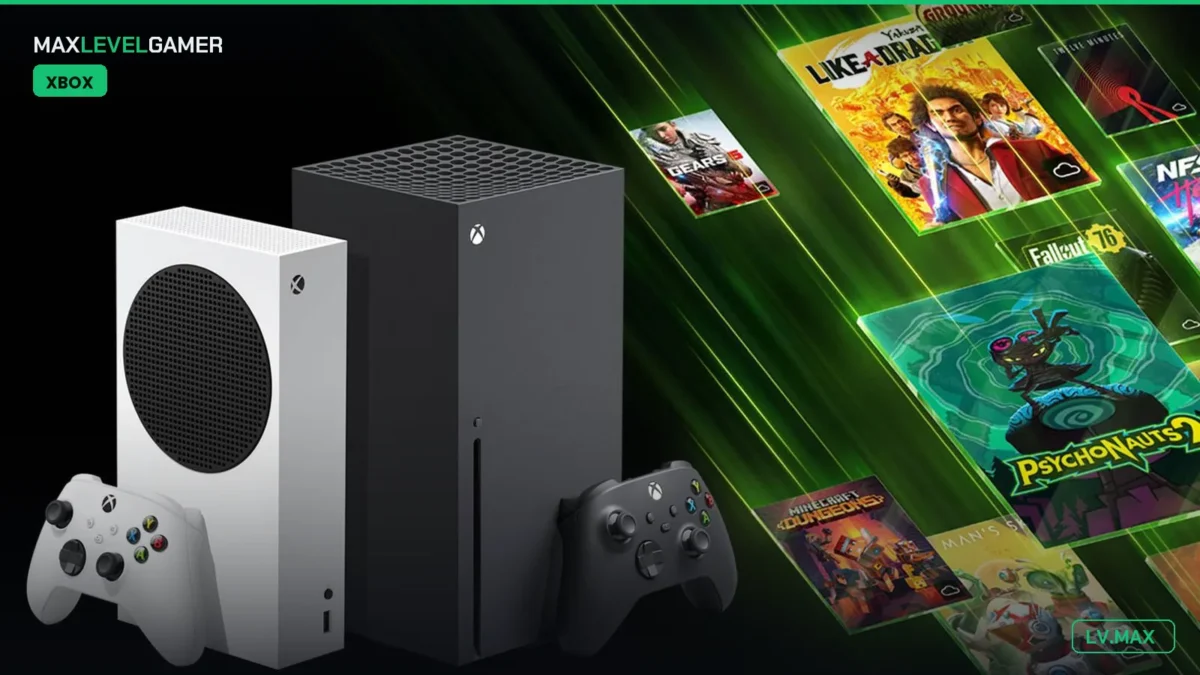
…and the part that really gets under our skin is that 15 hours is the top tier. The most you can possibly pay Microsoft, the full-fat Game Pass Ultimate, the flagship, and you’re still being told, from November, that your cloud gaming has a meter bolted onto it now.
Fifteen hours a month for Ultimate. Ten for Premium. Five, a genuinely insulting five, for Essential.
Run the meter dry and you get to buy extra “playtime hours” from the Xbox Store, topping up your own console like it’s a pay-as-you-go Nokia in 2008. We sat down and did the maths against our own habits, and 15 hours is roughly four decent evenings of Forza before the stream cuts out and the app cheerfully suggests you go and buy the disc instead. Four evenings. On the most expensive tier they sell.
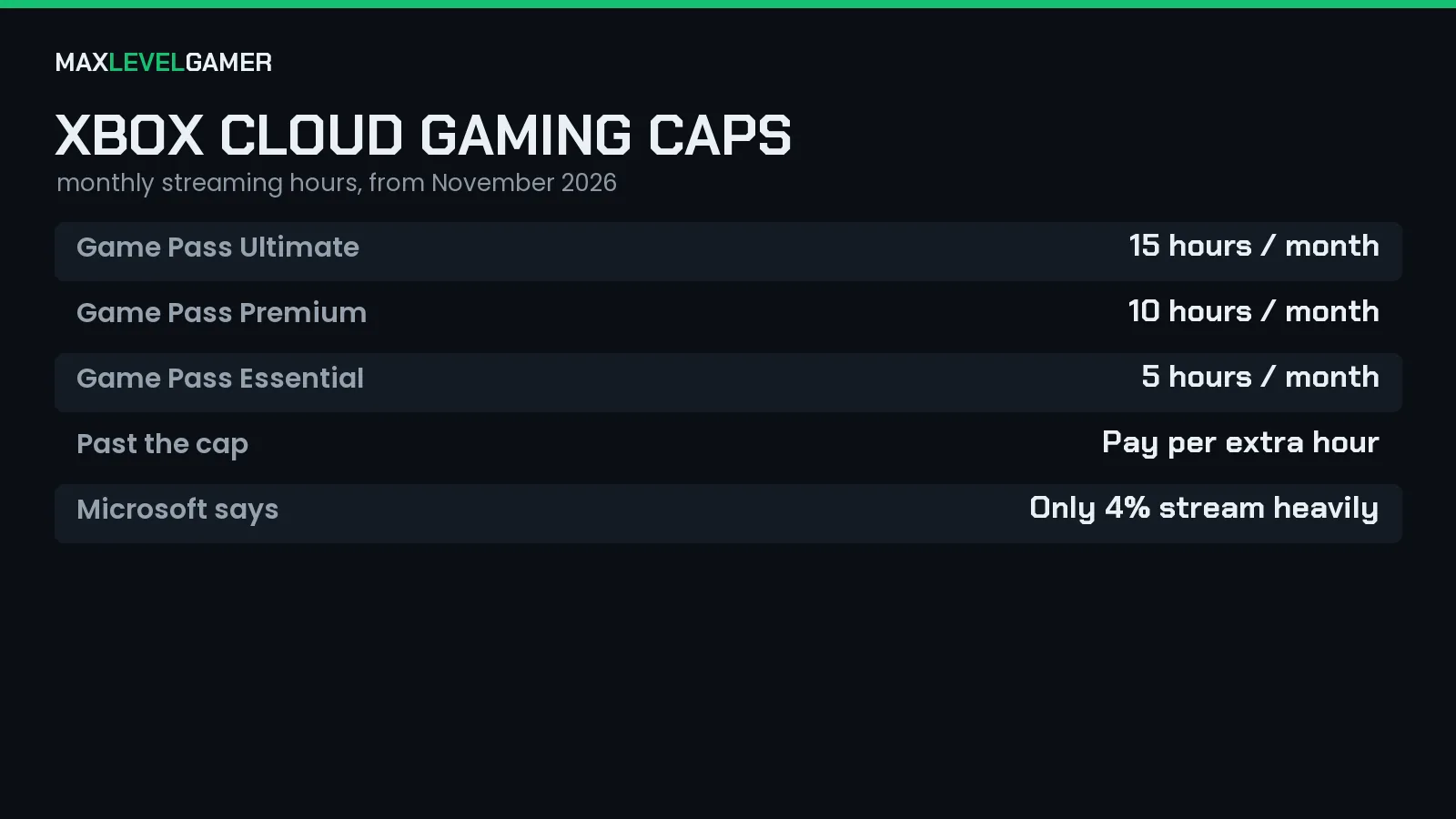
And to be fair, because we always try to be, Microsoft’s reasoning isn’t nonsense on its face. Running the server farms genuinely costs more the more people stream, that part is simply true, and the company reckons only around 4 percent of subscribers ever stream enough to bump into these caps in the first place. Fine. On paper, a limit that only touches the heaviest 4 percent while leaving everyone else completely alone sounds almost reasonable, the sort of line you’d nod along to in a press release and forget by lunchtime.
But sit with who that 4 percent actually is for a second, because this is the bit the press release very carefully declines to spell out. The people leaning hardest on cloud streaming, the ones burning through the hours, are overwhelmingly the exact people who cannot drop three, four, five hundred quid on a console or a proper gaming PC in the first place. That was the entire pitch of the thing, the whole reason cloud gaming was supposed to matter. Play the biggest, heaviest games on a cheap old laptop, a hand-me-down tablet, a phone on the bus home from a shift. The heavy users aren’t spoiled whales hogging a buffet they could easily afford twice over, they’re the players who don’t own, and often can’t afford, the hardware to play any other way at all. And metering them specifically, capping the exact people whose only route into modern gaming is the cloud, is a genuinely strange hill for a company the size of Microsoft to march up and plant a flag on.
Then remember you’re already paying a monthly subscription for every bit of this. And now, stacked right on top of that subscription, you might pay again, by the hour, just to keep using the very service the subscription was supposed to be. Own nothing, rent everything, and please insert another coin if you’d like to rent it a little bit longer. That’s not a slippery-slope hypothetical we’ve cooked up to be dramatic. That’s the pricing page, from November.
And here’s the wider shape of it, the bit that turns a shrug into a proper eye-roll. Game Pass has only ever moved in one direction on price. Tiers get renamed, the good perks quietly migrate up to the dearest plan, day-one releases wobble in and out of the cheaper tier, and the monthly figure climbs. Nobody who has held a Game Pass sub for a few years is paying what they started on. Now layer a per-hour cloud cap on top of that steady creep and the picture gets uglier: you’re not just paying more each year for the same subscription, you’re being handed a second, smaller meter inside the one you already bought. Death by a thousand tiers.
They renamed the plans. They didn’t lower a single price.
Cloud gaming was sold to us as the door that finally let more people into the room. The dream where hardware stopped being the ticket price and anyone with a screen and a half-decent connection could just play the big stuff. Instead they’ve gone and fitted that door with a turnstile and a coin slot, then pointed at the 4 percent squeezing through it most often as the reason they had to.
If you’re now weighing the cloud against simply owning a thing that plays your library outright, no meter, no monthly hour count, our 2026 handheld guide suddenly reads very, very differently than it did a week ago. Anyway. Microsoft has never once, in the entire life of Game Pass, added a limit and then quietly loosened it later, so.