Blood Gulch, 2 a.m.
There were four of us in a box room above a garage, two Xboxes wired together
with a crossover cable one of us had bought from Maplin that afternoon, and a
14-inch portable telly that kept losing colour if anyone leant on it. The map
was Blood Gulch. It was always Blood Gulch. We had worked out that if you
parked the Warthog on the lip of the red base, the gunner could cover the
whole canyon, and we had also worked out that the gunner was going to get
sniped in the head inside twenty seconds anyway. Nobody cared. We played until
the birds started and then we played another round because nobody wanted to be
the one who said stop.
That room is where most of us actually met Halo: Combat Evolved. Not in the
campaign, not in a review, but in a cramped space with too many people, a
tangle of cables, and a game that somehow made a controller feel like it had
been designed for shooting all along.
15 November 2001
The facts are tidy. Halo launched alongside the original Xbox on 15 November
2001, priced at $49.99, and by April 2002 Microsoft was announcing it had
passed a million copies in the US and Canada, roughly six sold every minute
since launch according to
Microsoft’s own press release. The same release noted that 86 percent of UK Xbox buyers took Halo home
with the console. That is not an attach rate. That is a reason to own the
machine.
What those numbers hide is how close it came to being something else. Bungie
first showed Halo at Macworld in 1999 as a third-person game for Mac and PC,
with roots in the studio’s real-time strategy work, and it only became an Xbox
launch title after Microsoft bought the studio in 2000. The console version
had around a year of frantic rework, and the strain shows in places. It also,
oddly, explains why it landed so well.
The Pistol
Ask anyone who played in 2001 and they will tell you about the pistol.
Three-shot headshot, a 2x scope, and a kick that made every other handgun in
the genre feel like a water pistol. It was overpowered, and Bungie knew it,
and it was glorious.
The pistol matters because it sat inside a set of rules that Halo made
standard for a generation. You could carry two weapons and no more, so every
pickup was a decision rather than a hoarding exercise. Your shield recharged
if you hid for a few seconds, but the health bar underneath it did not, so you
still had to go hunting for medkits in the dark. Grenades had their own
button. Melee had its own button. The right stick looked, the left stick
moved, and a gentle aim assist made the whole thing feel natural on a pad that
had never been natural for shooters. As
GamesRadar
has argued, none of these ideas were strictly new. Regenerating shields were
decades old in space sims and dual-stick aiming had been tried before. What
Bungie did was bolt them together into one system, tune it for an hour, then
tune it for another year, until the loop that designer Jaime Griesemer
famously called “thirty seconds of fun” held up for ten hours of campaign and
a thousand nights of Blood Gulch.
Every console shooter since has lived in that house. Call of Duty took the
recharging health and threw away the medkits. Gears took the two-weapon logic
and added a chainsaw. Destiny took the whole thing, pistol included, and built
a decade around it. The hard thing to explain to anyone under thirty is how
strange these rules felt in 2001, and how obvious they felt by 2003.
The Library
Then there is the level nobody defends.
The Library is forty minutes of identical grey corridors, a floating light
that tells you to hurry up, and Flood pouring out of every door. It is a mess.
It was clearly made under deadline. It is also the clearest example of why
Combat Evolved still works, because the sandbox underneath survives even when
the level design around it falls over. The shotgun still feels right. The
combat forms still flinch when you hit them. You still find yourself backing
into a corner with a grenade in your hand and a plan that is going to go
wrong.
Halo Studios reworked The Library for the new remake, trimming it for pacing,
according to the
community wiki’s breakdown
of what changed. We understand the instinct. We also think there is something
telling in a series that now sands down its own rough edges before anyone has
a chance to argue about them.
18 November 2025
Halo Infinite was sold in 2020 as the start of “the next ten years of Halo.”
Its last major content drop, Operation: Infinite, arrived on 18 November 2025,
barely four years in, when community manager John Junyszek told a livestream
it would be the studio’s
“last planned major content release.”
The game was not bad. Its gunplay was the best the series had managed since
Reach. But it launched without campaign co-op, without Forge, with a
progression system that felt built for a spreadsheet, and by the time those
gaps were filled the audience had drifted off to shooters that had learned
Halo’s lessons faster than Halo had.
This is the part the anniversary pieces tend to skip. Combat Evolved shipped
complete. The disc had a campaign, split-screen co-op, and sixteen-player
System Link multiplayer, and nothing on it asked you to come back next season.
The series that followed slowly inverted that, chasing live-service platforms
while the sandbox it invented was being refined elsewhere.
28 July 2026
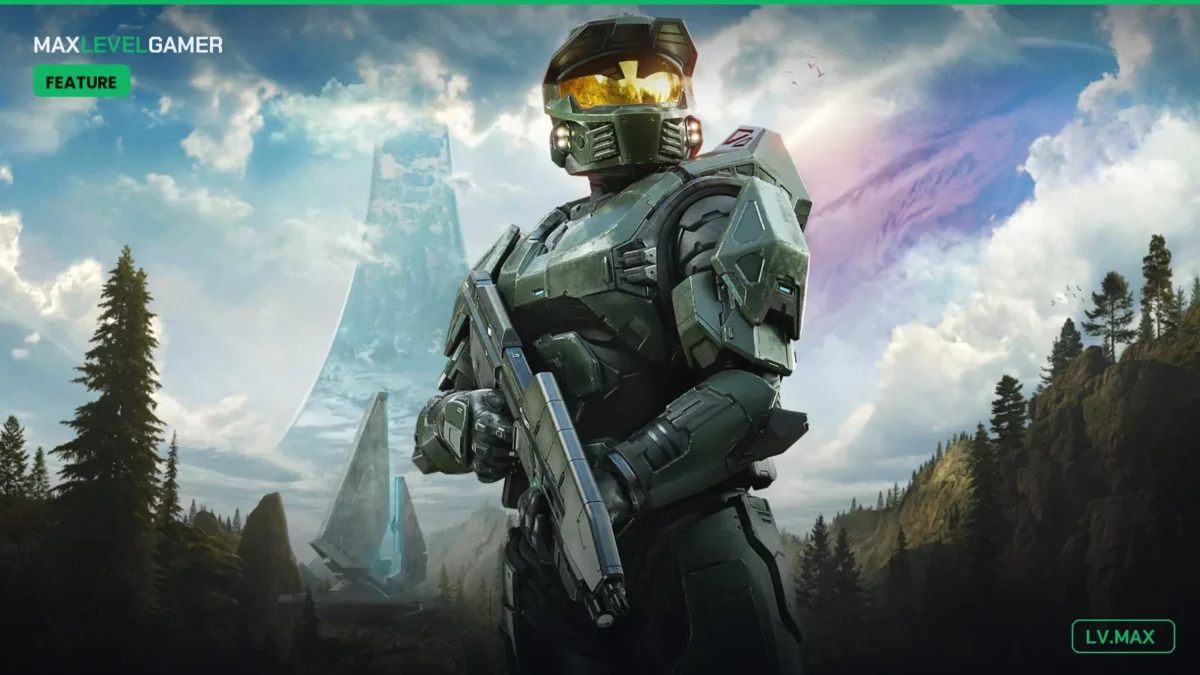
Which brings us to Halo: Campaign Evolved, the Unreal Engine 5 remake Halo
Studios revealed at the Halo World Championship in October 2025 and released
on 28 July this year for Xbox Series X|S, PC and, for the first time in the
franchise’s history, PlayStation 5. The standard edition went straight onto
Game Pass. It added three prequel missions set a year before the ring, nine
weapons the original campaign never had, a drivable Wraith, a fourth seat on
the Warthog, and online co-op for four. It did not add multiplayer. No Blood
Gulch. No sixteen-player System Link equivalent. No pistol duels at 2 a.m.
Critics were broadly kind.
Pure Xbox’s roundup
put it at 81 on Metacritic, with IGN calling it a “slim package” at seven out
of ten and GamesRadar describing the new missions as “superfluous.” Players
were less patient. The user score sank into the fives amid complaints about
re-recorded dialogue, softened enemy AI, the removal of health kits in favour
of a later-Halo recharge system, and a $50 price tag for a campaign-only
remake, as
KitGuru
reported. That last change is the one that stings. Halo’s health kits were not
a legacy quirk. They were the reason you crept rather than charged.
Nine days after launch, developers at Halo Studios began posting on LinkedIn
that they had been let go. On 22 September, Xbox confirmed 268 roles cut
across its studios and announced that the next mainline Halo would be built by
a “new, purpose-built team” at Activision, with a small group at Halo Studios
kept on to support existing games, per
Gematsu. Twenty-five years after Bungie’s launch title saved a console, the studio
bearing Halo’s name is a support desk.
The Warthog
We keep coming back to the Warthog. It handled like a shopping trolley on ice
and we loved it anyway, because it was the first time a console shooter had
put a vehicle in your hands that felt like a toy rather than a cutscene. You
could flip it with a grenade. You could run over your own mate. You could
drive it off the edge of the Silent Cartographer beach for no reason other
than to see what happened. Halo trusted you with that. It trusted you with a
sandbox and a pile of rules and then got out of the way.
The remake gives the Warthog a fourth seat. It is a thoughtful touch, and the
kind of thing that would have mattered in the garage room with four of us and
one too many bodies. It just arrives in a version of Halo where there is
nowhere for the four of us to go once the credits roll.
Blood Gulch, again
We dug the crossover cable out last week. It still works, which is more than
can be said for the telly. Two original Xboxes, two dusty copies of the disc,
the canyon loading in that particular shade of green. Someone parked the
Warthog on the lip of the red base. Someone got sniped in the head inside
twenty seconds. The birds will be starting soon, and nobody has said stop.


